
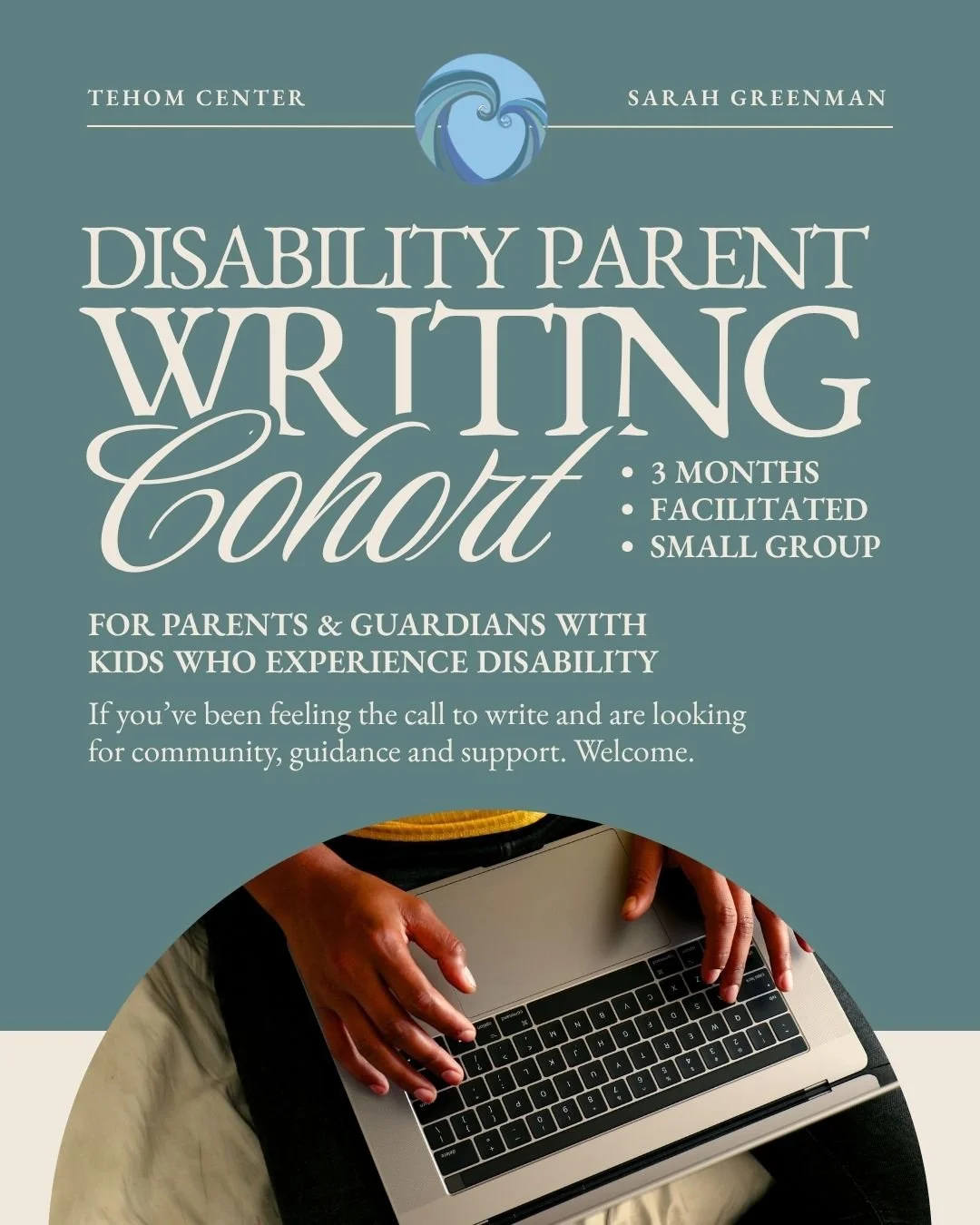
WELCOME
you just found your people
We are parents navigating disability alongside our children. This is a three-month writing cohort for telling those stories well.
QUESTIONS YOU’VE BEEN CARRYING
How do I tell this story?
Which parts are mine?
What belongs to my child?
What is ours to share, and with whom?
If you've asked yourself any of these questions, you're in good company. Most of us have a lot to say about this life and very few places to say it with both honesty and care.
This cohort starts with those questions instead of rushing past them. You'll write with other parents who understand the logistics, the love, the grief, and the humor without a long introduction, and who are also working out how to tell the story responsibly.
What We’ll Do Together
Write from deep inside our experience
Scenes, memories, letters, and the things we're not supposed to say. Not a polished version for outsiders, but the real one.
Expand our understanding of ethical storytelling
What's ours to tell, what's our child's, and what belongs to the wider community. We practice writing about people we love without speaking over them or for them.
Build our analysis around accessibility, interdependence, and disability justice
We read and talk about how these ideas change the way we see our families, and the way we write about them. You don't need to arrive knowing the vocabulary.
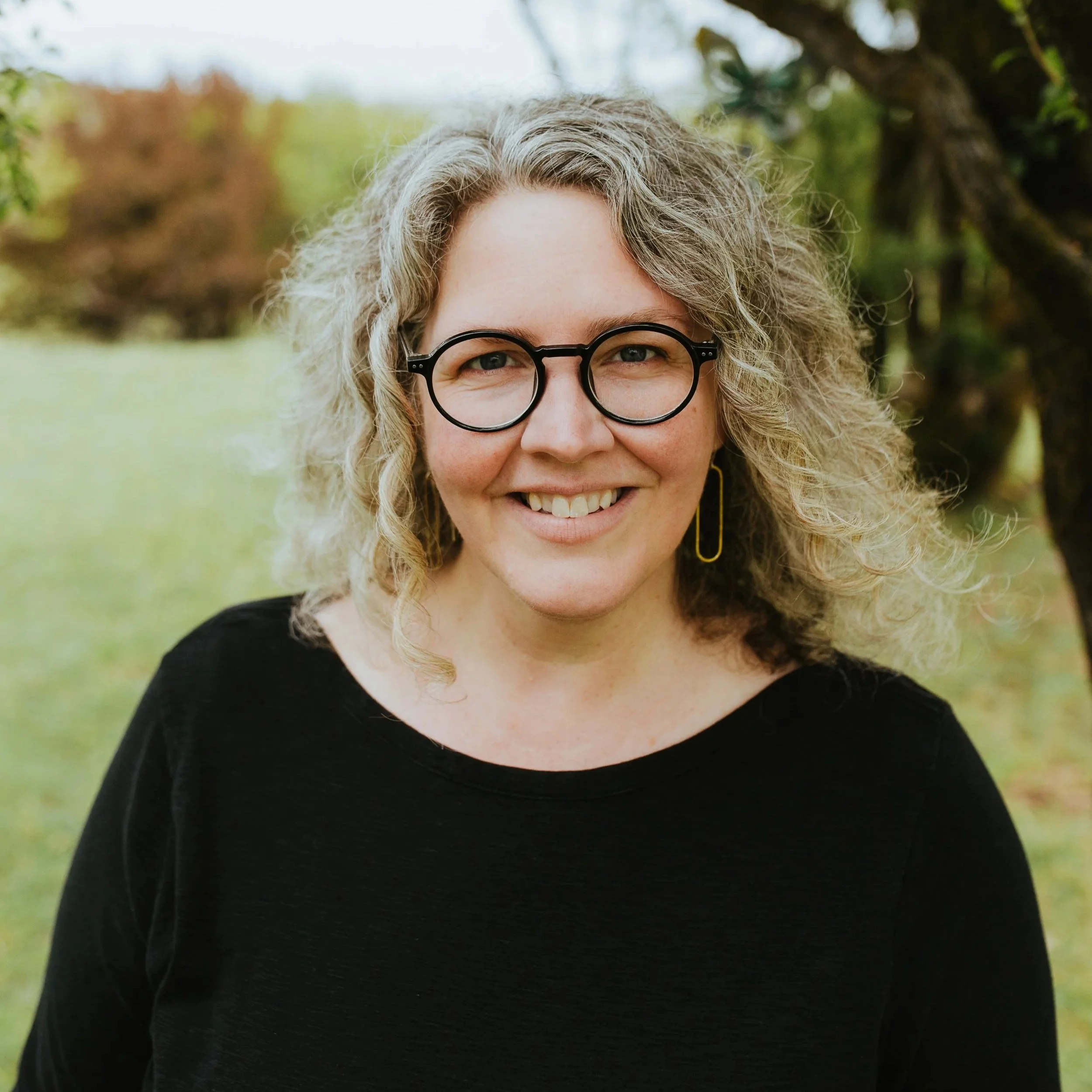
YOUR GUIDE
Sarah Greenman
Sarah (she/they) is a queer artist, author, theater-maker, birth worker, nonprofit professional, facilitator, mother, and disability justice advocate. She is also a book coach at Tehom Center Publishing and has over 20 years of writing and editing experience. As a parent caring for a child with severe intersecting disabilities and medical complexities, Sarah knows intimately what life is like with kids and young adults who experience disability. She is a big fan of cohort writing models and is ready to support your writing.
What to Expect
“In all of my work for disability justice, I always come back to the human parts of disability. The parts that we would rather not talk about. The parts that are not about the bills or budgets or laws or services. The parts that live under our skin and inside of our bones and cells. The parts that are buried. The parts that most of us have had to learn how to navigate on our own, if we learn to navigate them at all.”
Mia Mingus, in a lecture at San Francisco State University, “Access Intimacy, Interdependence and Disability Justice”
Mia’s words are at the center of our work together. We will write, discover, hone, discuss, and share those experiences that live under our skin and inside of our bones and cells as disability parents.
The cohort consists of six 90-minute sessions.
Each one will be facilitated, focused and inspire your writing. As a facilitator, Sarah will hold the space with an eye towards equity. She’ll attend to the emergent needs of the group and foster a space for freedom of thought and expression. Sarah will share expansive writing promts, ask thoughtful questions, and work with participants to build a resilient, accountable, and generative working environment.
You'll also receive:
One-on-one editing support from Sarah (March - May 2027)
Facilitated group feedback (optional)
Access to Tehom Center's Author Community Facebook page
A disability parent resource guide
A reading list curated just for you
If you're writing a book, Tehom Center Publishing will also review and consider your completed manuscript and book proposal for publication with their press or with a partner press.
How We Work
Each session combines a short reading or craft talk, guided writing time, and optional sharing in a small group. Feedback is about what's working on the page and what you're reaching for. It never grades your life.
We know caregiving doesn't keep a schedule. If a week falls apart, you come back the next one. Interdependence isn't only a topic here; it's how we run the group.

Planning Ahead
All sessions happen on Zoom from 10:00-11:30am Pacific Time.
Tuesday, March 2
Tuesday, March 16
Tuesday, March 30
Tuesday, April 13
Tuesday, April 27
Tuesday, May 11
We know caregiving doesn't keep a schedule. That’s why we plan for built-in flexibility. We will record and share all sessions with cohort members. While we encourage having your cameras on, feel free to participate with cameras off.
The Cadence
MONTH ONE
Write from the inside
Writing to find out what's actually there. We build a regular practice, move from summary into scene, and let ourselves say what's true.
Whose story is it?
Ethics, consent, privacy, and dignity. We read disabled writers and other parents, and bring disability justice into our drafts.
MONTH TWO
Shape it
We’ll go deeper. We’ll listen for HOW your stories want to be told. Sarah will share more prompts and invitations for exploration. We’ll play with form (essay, letter, poem, chapter) and think about what to include from your first rounds of writing.
Share it
We’ll practice reading our passages with the group (always optional) and develop a feedback format that works to support your revisions and story development.
MONTH THREE
Edit & Revise
Work with an editorial eye towards our writing. Pracitce techniques for revising and honing our stories.
Final Session - Readings
Share your work and hear directly from your peers. Reading aloud is always optional, but highly encouraged. We’ll close with options for next steps and invitations to keep going!
Who is This For?
THIS IS FOR YOU IF
You're a parent or caregiver navigating disability alongside your child, of any kind, at any age.
You want to write about it and aren't sure where to start, or what's yours to tell.
You're a beginner, a lapsed writer, or someone who writes for a living.
You want company that doesn't ask you to perform resilience.
THIS IS NOT
A support group or therapy. It's a writing community.
A place for stories that frame disability as only tragedy or triumph.
A requirement to share anything you'd rather keep private.
Registration is Open
INVESTMENT: $3,300
Three Months
Six live 90-min sessions
Facilitated gatherings via Zoom
Individual editing support from Sarah Greenman
Optional group feedback (always your choice)
Resource sharing
Bomb-ass reading list
Access to Tehom Center’s Facebook Authors Page
Tehom Center Publishing will review and consider your completed manuscript for an option to publish with their press or a partner press
I don’t consider myself a writer. Is this really for me?
Yes. You don't need experience or a project. If you can describe a day in your life to a friend, you have what you need, and we'll build from there.
How do I participate?
Register by paying in full or on a monthly payment plan and fill out the registration form.
What is the timeline?
The Disability Parent Writing Cohort meets March. 2, March 16, March 30, April 13, April 27, and May 11 from 10:00-11:30am Pacific Time on Zoom. Submissions for potential publication with TCP or a partner press are ongoing.
Do I need to know about the Disability Justice framework already?
No. Curiosity is enough. We read and talk together, and nobody is expected to arrive as an expert or to have the right words.
Do I have to share what I write?
No. Sharing is always an invitation. You can write every week and never read a word aloud, and you will still be a full member of the group.
How do you handle my child's privacy?
It's central to the cohort. We spend real time on what's ours to share and what isn't, and we agree as a group that what's shared in the room stays in the room. You decide what leaves your notebook.
Is this therapy or a support group?
No. Writing can be healing, but this is a writing cohort. This is not the place to seek clinical support.
What if I miss a session?
Parenting alongside disability means plans change, and the cohort is built with that in mind. We record all sessions and share them with cohort members. And if you need to be off camera for any reason, you are welcome to do so.
Could my writing be published?
That's up to you. Many people write only for themselves or their family, and that's a complete outcome. If you're a member of the cohort who writes a book and decides to submit it to Tehom Center Publishing, there is a possibility for publication with TCP or one of their partner presses.
What do authors who publish with Tehom Center recieve?
TCP authors recieve full book formatting (interior and exterior design), 20% author royalties (double industry standard), 5 free copies of their book, and their books available for sale on the TCP website, Amazon.com, and BarnesandNoble.com.
Do I have to publish with TCP?
No. While most coaching clients choose to submit manuscripts for potential publication with TCP or one of their publishing partners, some also choose to publish elsewhere, self-publish, or forego publishing. Publishing with TCP is not required. Please visit the Tehom Center website for more information about publishing.
Questions about the cohort? Reach out.